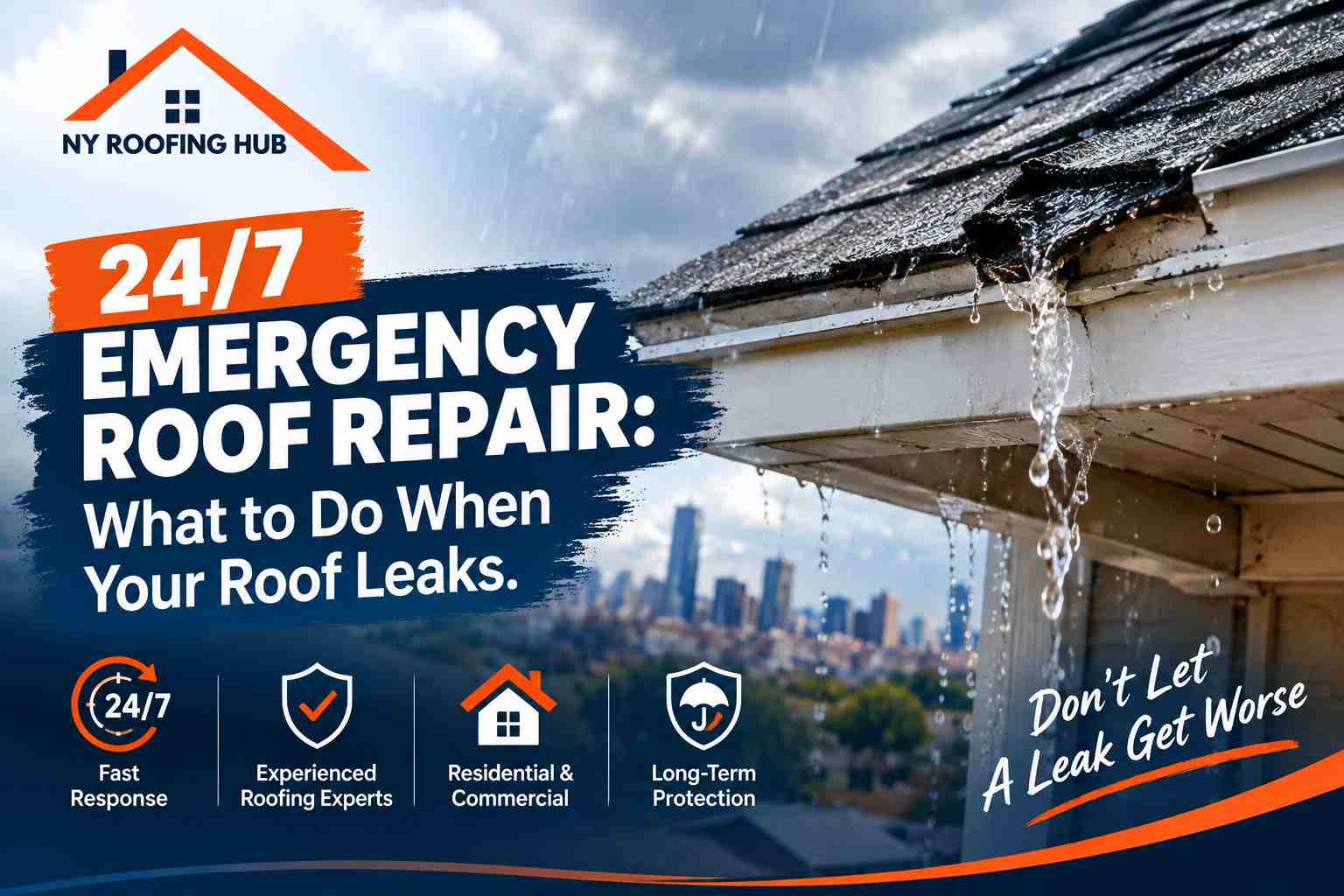
A roof leak at night leaves you with decisions that cannot wait for a normal workday. Water may be dripping into a bedroom, spreading across a ceiling, or entering through roofing damaged by the wind. Your first priority is keeping people away from danger, then getting help to assess the roof.
24/7 emergency roof repair gives property owners a way to seek roofing help outside regular business hours. What happens next depends on the damage, weather, safe access, and the contractor’s current availability. The first visit may involve temporary protection, with permanent repairs arranged afterward.
This guide explains what to do first, what information to share, and how to understand the repair options for your home or commercial property.
What to Do First When Your Roof Starts Leaking at Night
Keep clear of the damaged area and contact a roofing professional. You do not need to find the opening yourself before asking for help. A clear description of what is happening inside is enough to start the conversation.
Keep People Away From the Affected Area
Move children, pets, and other occupants away from the leak. Do not stand beneath a bulging ceiling, press on wet drywall, or puncture it to release water. Stay away from wet light fixtures, outlets, and electrical equipment.
If there is an immediate threat to life, fire, or signs of collapse, move to safety and call 911. Do not wait for a roofing appointment to address an immediate danger.
Protect Belongings Only Where It Is Safe
Move dry, accessible belongings away from the affected area if doing so does not put you beneath damaged materials or near electricity. Leave heavy furniture and anything in an unsafe area where it is.
During a thunderstorm, stay inside a safe building rather than going outdoors to inspect the roof. Avoid fallen wires after the storm and report them to the utility company. The American Red Cross thunderstorm safety guide explains these precautions.
Call for Help and Describe What You Can See
Tell the roofer whether water is still entering, which rooms are affected, and when the problem started. Mention any fallen branches, missing roofing, or changes in the ceiling that you have noticed from a safe position.
For an active roof leak in Westchester County, call NY Roofing Hub at (914) 327-2775 to explain the situation and check current availability. If you rent the property, notify your landlord or building manager as well.
Roof Damage That Needs Emergency Attention Right Away
Urgency depends on what the damage is doing to the building and the people inside. An old, dry stain and water actively entering a room need different responses. Describe current conditions when you call so the contractor can understand the concern.
Active Leaks and Water Entering Living Spaces
Ongoing water entry deserves prompt attention, especially when it affects occupied rooms or spreads into additional areas. Report whether you see a slow drip, a steady flow, or several wet spots.
If the dripping stops when rain ends, still arrange an assessment. A pause in visible water entry does not establish that the roof has been repaired.
Missing Roofing After Strong Winds or Falling Debris
Missing shingles, lifted roof materials, or an opening left by a branch are reasons to contact a roofer promptly. Tell the contractor whether rain is continuing and whether debris remains on the roof.
Do not climb up to remove branches or reposition loose materials. Explain what you can see from shelter or, once conditions are safe, from the ground.
Sagging Ceilings and Signs of Structural Damage
A sagging ceiling, falling material, or a roof section that appears to have shifted needs more than a routine repair request. Keep people away and seek emergency assistance if there is a risk of collapse or injury.
Roofing repairs can be assessed after immediate hazards are addressed. A phone conversation cannot establish whether a damaged room or building is safe to occupy.
What 24/7 Emergency Roof Repair Means for Your Property
When comparing 24-hour emergency roof repair services, ask what help is available now. Does the company answer calls overnight, dispatch crews after hours, or arrange the earliest safe visit? Those are different levels of service.
Availability also differs from arrival time. Heavy weather, blocked roads, roof height, and existing emergency work can affect scheduling. Ask for a realistic update based on your location and the conditions.
A useful emergency response establishes the immediate concern, identifies what can be done safely, and explains the next step. It should also distinguish temporary protection from the work required to repair the roof itself.
You can review NY Roofing Hub’s emergency roofing services and call with your property details. Mention an active leak at the start of the conversation so the team understands why you need help.
What Happens After You Call an Emergency Roofing Team
Knowing the likely sequence makes it easier to prepare. The exact work varies, but the process generally moves from gathering information to assessing the roof and recommending an appropriate response.
Initial Questions About the Leak and Your Property
Have these details ready if you know them:
- Property address and a callback number.
- Whether the building is a home, rental property, or business.
- Where water is appearing and whether it is still entering.
- When the leak started and whether it followed a storm.
- Roof type, previous repairs, and access information.
- Any visible hazards or areas occupants cannot use.
You do not need technical names for the roof materials. Plain descriptions help, and safely taken photos can provide additional context.
Roof Assessment When Weather and Access Allow
The contractor examines relevant areas when conditions permit. This may include the roof covering, flashing, connections, and accessible interior signs of leakage. Some problems remain concealed beneath roofing or inside the building until further investigation is possible.
Ask what the assessment has established and what remains uncertain. The first explanation should separate observed damage from a suspected cause.
Temporary Protection and Recommended Repairs
Where suitable, a roofer may recommend temporary protection to limit further exposure. The method depends on the roof system, affected area, and working conditions. A tarp is one possibility, but it is not appropriate for every roof or situation.
Before authorizing work, clarify what the immediate visit includes, what requires a return visit, and how the proposed repairs will be documented.
Temporary Roof Protection and Permanent Repairs Explained
Emergency roof leak repair can involve more than one stage. Temporary protection addresses the immediate exposure while the contractor establishes or schedules the permanent work.
 Keep the emergency work record and any photos the contractor provides. Ask whom to contact if water returns before permanent repairs are completed. Do not assume the end of visible dripping means every damaged component has been addressed.
Common Roof Problems Behind Sudden Leaks and Water Damage
A ceiling stain shows where water has become visible, but it does not always identify the entry point. Water can travel before appearing indoors. The roofer needs to investigate the surrounding roof details rather than treating the closest visible spot as a confirmed cause.
Missing Shingles and Wind-Damaged Roof Sections
Missing, broken, or lifted shingles can leave areas of the roofing system exposed. The assessment should consider nearby shingles and the layers beneath the damaged section, not only the missing pieces.
For a sloped asphalt roof, shingle roofing repairs may address limited damage when the surrounding materials remain suitable. More widespread deterioration can change that recommendation.
Leaks Around Chimneys, Vents, and Roof Flashing
Flashing helps direct water away from roof connections, including chimneys and adjoining walls. Damaged connections may need attention even when nearby shingles look intact. Vents and other openings also require appropriate weatherproofing details.
Roofing is a system of connected parts, including the deck, underlayment, covering, and flashing. GAF’s roof component guide explains their roles. Replacing a visible shingle alone may not address a defect at a roof connection.
Flat Roof Seams and Drainage Problems
On a flat or low-slope roof, the investigation may involve membrane damage, seams, wall connections, and drainage outlets. Water remaining on the roof is a reason to investigate drainage and the roof’s condition; it does not identify a single cause by itself.
Describe any previous patching or recurring leaks to the contractor. For commercial buildings, also identify rooftop equipment and restrictions on access. These details help the roofer assess the relevant areas without assuming every flat roof requires the same repair.
When Emergency Repairs Are Enough and When to Replace
A roof emergency does not automatically mean you need a new roof. A damaged section on an otherwise serviceable system may be suitable for repair. The decision depends on the extent of damage and the condition of the surrounding materials.
Replacement becomes a discussion when deterioration is widespread, several sections have failed, or the existing system cannot support a suitable repair. Age and previous work help provide context, but the recommendation should connect to findings on your property.
Ask the contractor three questions before deciding:
- What defect has been identified?
- What will the proposed repair address?
- What problems, if any, would remain afterward?
If replacement is recommended, request an explanation of why a smaller repair would be insufficient. Our roof replacement services explain the broader work involved. Urgent protection and the long-term replacement decision can be separate steps.
How to Choose a Roofer When You Need Urgent Repairs
Choose a contractor who explains what can happen now and what needs further assessment. You should be able to identify the business, reach a responsible contact, and understand the proposed work even during an urgent situation.
Confirm that the company works with your roof type and serves your address. Request relevant licensing and insurance information, and verify credentials with the appropriate issuing authority where applicable.
Ask for a written description of the emergency work. It should distinguish temporary measures from permanent repairs and explain any follow-up arrangements. Clarify charges, approval for additional work, and applicable warranty terms before proceeding.
Be cautious about a definite replacement recommendation made without a suitable assessment. A clear explanation of the findings is more useful than a broad promise to fix everything immediately.
Frequently Asked Questions
Can Emergency Roof Repairs Be Done During Rain?
Some temporary measures may be possible when conditions allow safe work. Heavy rain, lightning, wind, slippery surfaces, and the requirements of the selected repair materials can limit what can be completed. Call to report the damage rather than assuming the team can start permanent repairs immediately.
Should I Climb Onto the Roof to Find the Leak?
No. Leave roof access and inspection to trained professionals, especially during darkness, storms, or after damage. Describe the indoor signs and share photos from a safe location. You do not need to reach the roof to provide useful information.
Does a Roof Tarp Replace the Need for Further Repairs?
No. A tarp is temporary protection, not a completed roof repair. Ask about its limitations and the follow-up plan. If leaking resumes, notify the contractor rather than climbing up to adjust the covering yourself.
What Photos Should I Share With the Roofing Company?
Share clear photos of visible stains, the affected room, or exterior damage photographed safely from the ground after the storm. Include a wider view for context and explain when the images were taken. Avoid entering hazardous areas or exposing private documents in the photos.
Get Help With an Urgent Roof Problem in Westchester NY
NY Roofing Hub brings 20+ years of roofing experience to assessing leaks, storm damage, and repair needs. We serve homeowners and property owners in Yonkers, Mount Vernon, New Rochelle, Pelham, Bronxville, and surrounding Westchester communities.
When you contact us, explain what is happening now, where the property is located, and whether water is still entering. We can discuss current availability and the next step for assessing the roof.
Learn more about our roofing services in Westchester, NY, or contact the team directly about an urgent concern.
Active roof leak? Call (914) 327-2775 to explain the problem and check availability.